
Did You Know
Wagon Ruts Eight Tracks Wide Still Scar the Ground Near Your Neighborhood
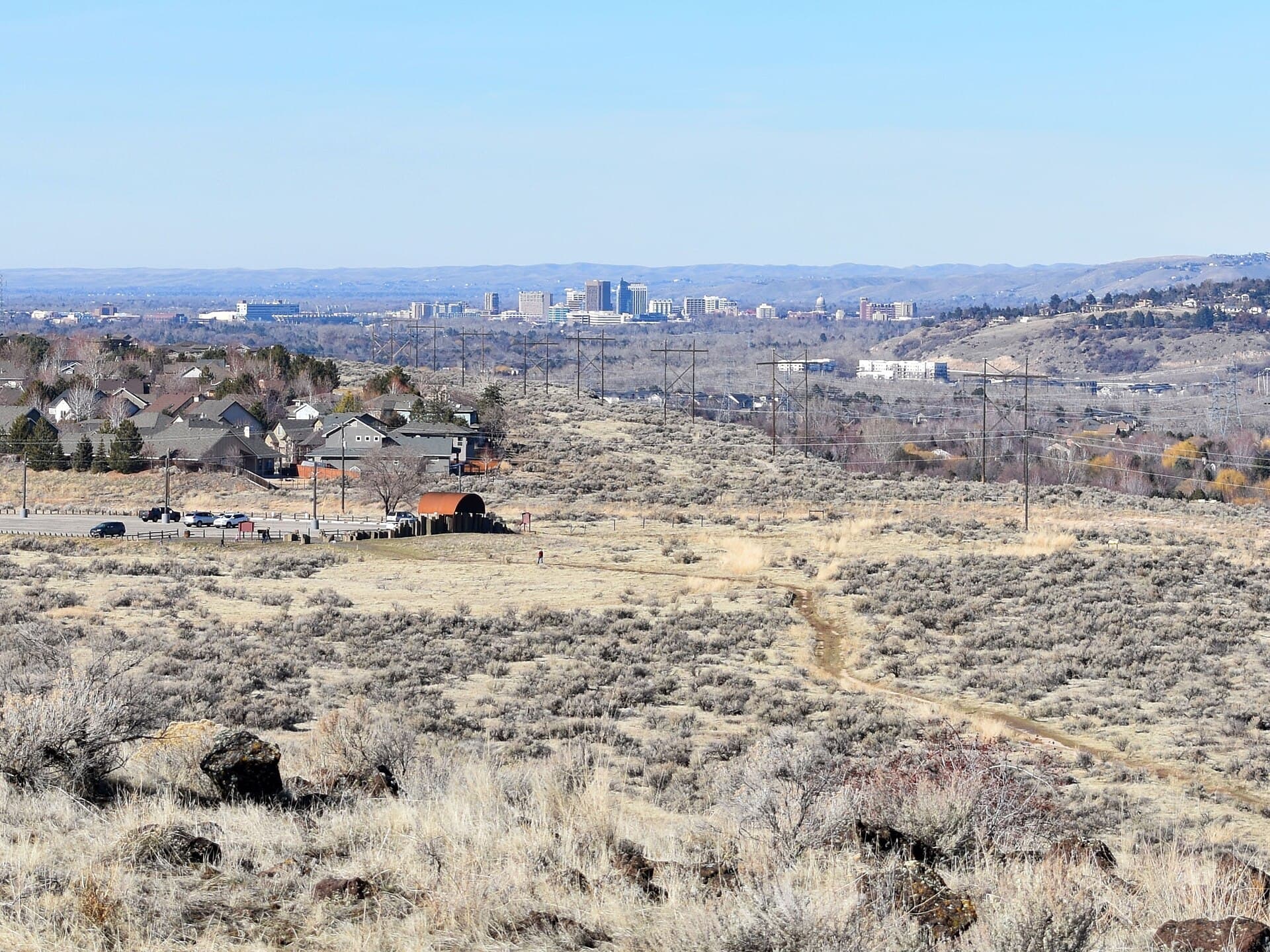
About eight miles of the Oregon Trail cut through the edges of Ada County, marked on the National Register of Historic Places and sitting closer to modern subdivisions than most Boiseans realize.
BOISE, ID—Somewhere near the quiet southeastern edge of the valley, the ground still holds the shape of a few hundred thousand wagon wheels. The Ada County segment of the Oregon Trail runs approximately eight miles as it descends into the Boise Valley, and it earned a spot on the National Register of Historic Places back in 1972.
That designation wasn’t ceremonial. At the time of the nomination, surveyors could trace wagon tracks almost continuously across several sections of land east and southeast of the city—ruts pressed so deep and so repeatedly into the earth that in places they spread eight tracks wide.

Eight tracks. That’s not a single well-worn path.
That’s generations of wagon trains fanning out across the same terrain, each driver edging slightly away from the ruts left by the last, until the migration itself became its own kind of road. The segment runs roughly from the northwest edge of what’s now suburban Boise toward the valley floor, following a corridor that overlaps, in places, with the Oregon Trail Reserve—a park on the Boise foothills bench where you can stand on a ridge, look north toward the skyline, and understand exactly why emigrants pushed toward this particular valley.

Water, cottonwoods, and a defensible approach: the Boise River made the destination obvious long before the city existed. What makes the Ada County segment quietly remarkable is how mundane its surroundings have become.

Modern roads, subdivisions, and trailhead parking lots have grown up around the ruts without erasing them entirely. The historic corridor isn’t preserved behind glass or fenced off from everyday life—it simply persists, tucked into the topography between a neighborhood and a ridge, waiting for someone to look down and notice the ground isn’t quite level in a very old and specific way.
For a city that tends to celebrate its newness, the Oregon Trail segment is an uncomfortable reminder that Boise sits on one of the most heavily trafficked overland routes in North American history. The people who wore those ruts into the earth weren’t passing through because the valley was already something.

They were passing through, and then staying, because the valley was promising. The ruts are still there.
The promise, it turns out, held.