
Did You Know
The Small Building on Main Street That Explains Why Boise Became the Capital
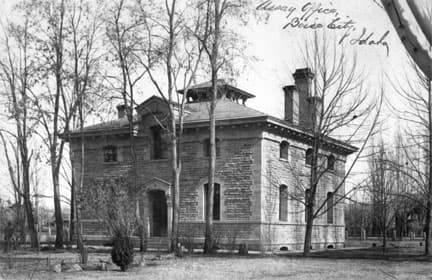
A modest federal building at 210 Main Street holds a surprisingly large clue about how gold mining shaped Boise’s rise in territorial Idaho.
BOISE, ID—There is a small historic building at 210 Main Street that most people walk past without a second thought, but it quietly explains more about Boise’s origins than almost anything else still standing downtown. S.
Assay Office, and it was the first major federal government building constructed in the Idaho Territory. That distinction alone is worth pausing on.

When the federal government decided to plant its first serious institutional footprint in Idaho, it chose Boise—and it chose to put a facility there for one very practical reason: gold. During the first half of the 1860s, Idaho’s gold production ranked third highest in the entire nation.
That is a staggering figure for a territory that had only recently been carved out of a larger administrative wilderness. The ore was coming out of the mountains in serious quantities, but moving it presented a real problem.

S. Mint was in San Francisco, and the distance made transport both expensive and risky.
What miners and merchants needed was a place closer to the source where ore could be tested, separated from its impurities, and officially valued. That is precisely what an assay office does.

It is essentially a laboratory and a ledger combined—a place where raw ore becomes a number, and that number becomes the basis for commerce. Boise, positioned as a supply and administrative hub for the surrounding mining regions, was the logical home for such a facility.
The building’s existence in Boise rather than some other territorial town was not incidental. It reflected a calculated federal judgment about which settlement had the stability and infrastructure to anchor Idaho’s mineral economy.

That judgment, in turn, helped cement Boise’s standing as the territory’s center of gravity—a status that eventually made it the permanent capital. The Assay Office still stands on Main Street, compact and easy to overlook beside the scale of what came after it.
But for a few decades in the nineteenth century, it was the most consequential small building in Idaho: the place where the territory’s wealth was measured, and one of the reasons Boise ended up being Boise.