
Did You Know
The Idaho State Capitol Was Built to Make Boise Feel Inevitable
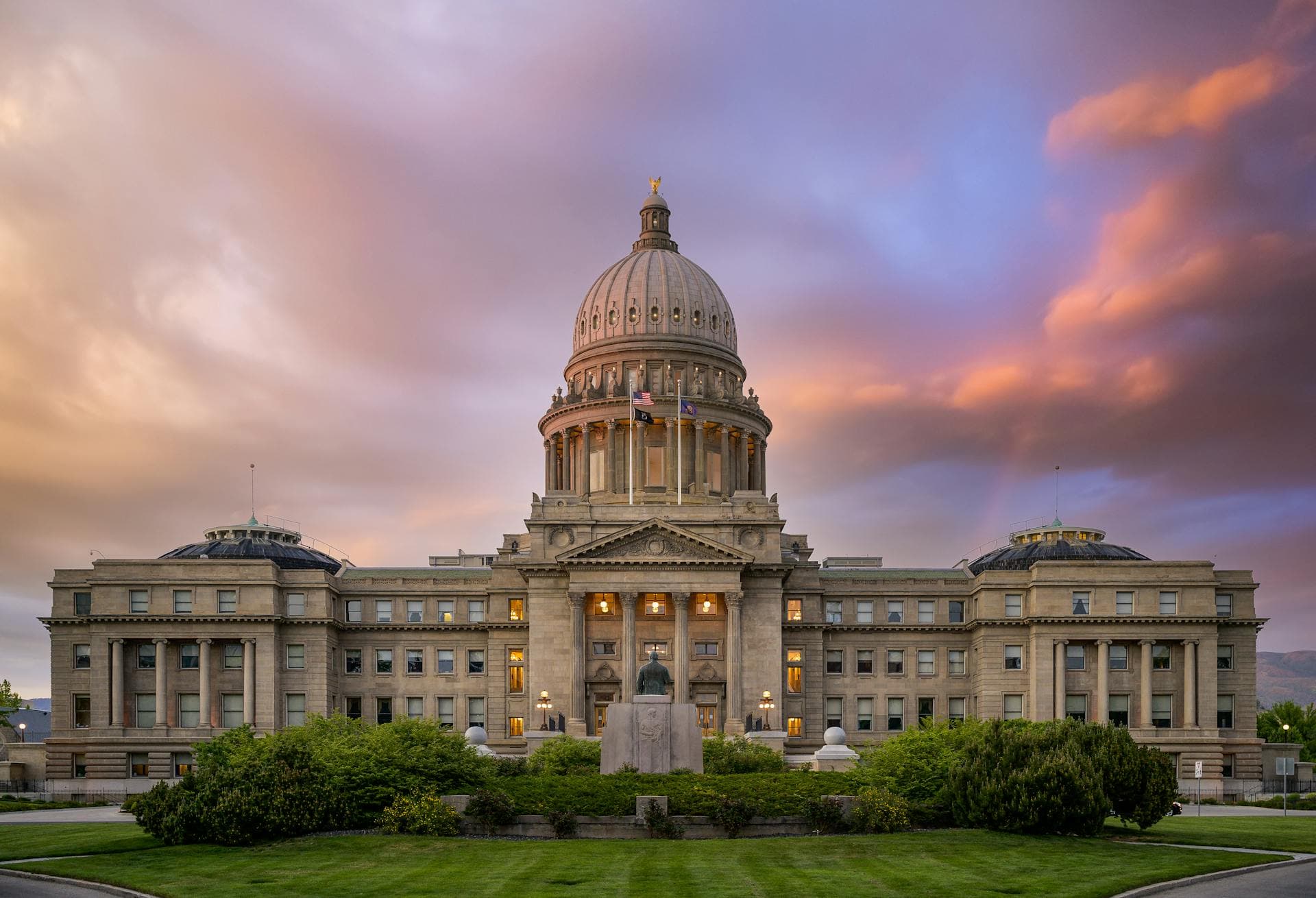
The Beaux-Arts dome on Jefferson Street wasn’t just a government building—it was an argument, made in stone, that Boise had already won.
BOISE, ID—There’s a particular kind of civic confidence built into the Idaho State Capitol that has nothing to do with what happens inside it. The building sits at the north end of Capitol Boulevard with the composure of something that was always going to be there.
Its Beaux-Arts dome—the formal style that gave American institutions their classical vocabulary in the late nineteenth and early twentieth centuries—rises above downtown with a deliberately unhurried authority. This was not a building designed to grow into its surroundings.

It was designed to make the surroundings grow into it. What makes the structure quietly remarkable is the material.
The capitol was built using local stone, which means the Idaho landscape is, in a literal sense, load-bearing. That choice wasn’t incidental.

Using regional stone tied the permanence of the building to the permanence of the place itself—a message that mattered in a city still working out whether it was a territorial outpost or a genuine capital. The Beaux-Arts style, which drew on Greek and Roman classical forms and enjoyed its American peak roughly between the 1880s and the 1920s, was precisely the vocabulary that growing cities reached for when they wanted to announce themselves.
Boise was a young city navigating its own scale when the capitol took shape, and the building answered that uncertainty with columns, symmetry, and a dome visible from most of the downtown core. Capitol Boulevard itself extends the argument southward, terminating at the river in a long, deliberate axis that frames the building from a distance.

The Memorial Bridge at the boulevard’s southern end completes the composition—turning a utilitarian crossing into a viewing platform for the dome it faces. Few American downtowns arranged their civic geometry this carefully.
The result is a building that functions as both government seat and urban anchor—the fixed point around which the rest of downtown has been orienting itself, sometimes consciously and sometimes not, for well over a century. Other cities got their capitols because they were already large.

Boise got a capitol that helped decide what it would become. It’s the architectural equivalent of dressing for the job you want.
The stone held.