
Did You Know
Boise’s Depot on the Bench Was Always Meant to Be a First Impression
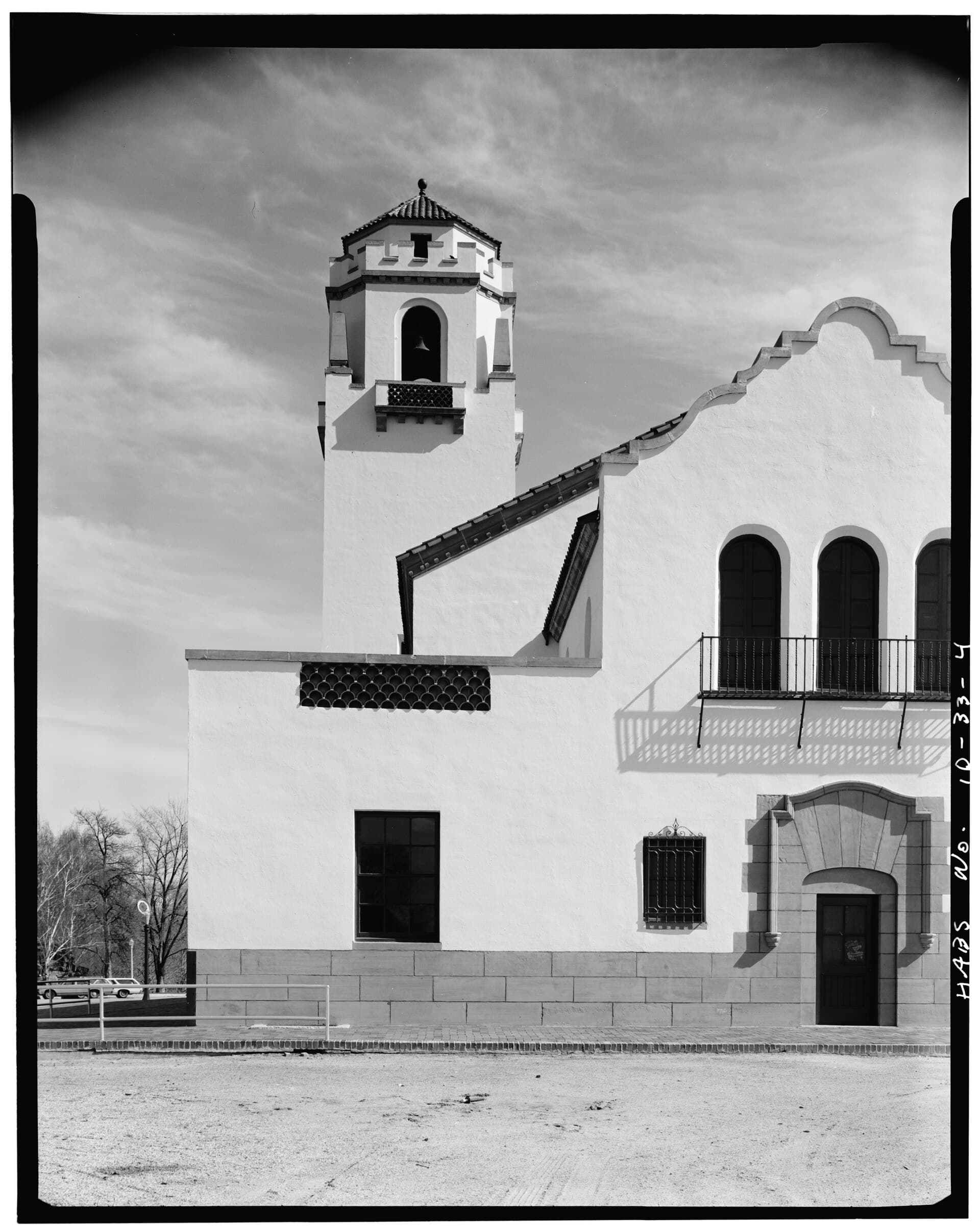
The Spanish-style Union Pacific depot at 2603 W. Eastover Terrace wasn’t just a train station—it was Boise’s formal introduction to anyone arriving by rail.
BOISE, ID—Most people who visit the Boise Depot today come for the view. The hilltop perch above the Bench looks out over downtown, and on a clear day you can trace the Boise Front all the way to the foothills.
It’s a fine overlook. But the building wasn’t designed with overlooks in mind.

The Union Pacific Railroad Depot at 2603 W. Eastover Terrace was conceived as a civic front door—the first piece of Boise a traveler would see after stepping off a train. That framing mattered.
Railroad depots in the early twentieth century weren’t merely functional; they were civic statements, and the companies that built them understood the persuasive power of architecture. A beautiful depot told an arriving passenger: this place is worth the trip.

The depot’s Spanish Colonial Revival style—terra cotta tile, stucco walls, a campanile bell tower standing watch over the whole composition—was a deliberate choice. The aesthetic carried associations with warmth, permanence, and a certain romantic grandeur.
Union Pacific used it across several western stations, but the Boise building’s placement on the Bench gave it an unusual advantage: the building reads as a landmark from a distance, which is rare for a train station and probably intentional. The interior waiting hall reinforces the same idea.

Painted roof trusses span the ceiling in the manner of a Spanish mission, and the space is generous enough that passengers wouldn’t feel processed through it so much as received by it. You weren’t just changing locations.
You were, in the depot’s own architectural logic, arriving somewhere that had prepared for you. Passenger rail service through Boise eventually faded, as it did across much of the American West, and the depot outlived its original purpose.

It has since become a city-owned event venue and community gathering space—still standing on its hill, still visible from a good stretch of town, still making the kind of entrance it was always built to make. The campanile, for its part, remains one of the more quietly assertive things on the Boise skyline.
It was designed to be seen from a train window. That it’s now seen from the freeway, from the foothills, and from living room windows across the South End is either a happy accident or proof that good civic architecture is patient.